
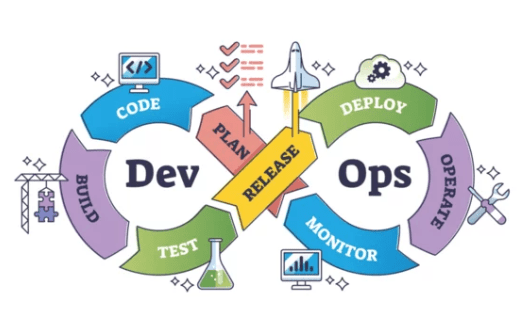
Let us be direct: defining the precise financial value of an infrastructure specialist is challenging due to widespread title ambiguity. Do your responsibilities end at maintaining basic deployment scripts, or do you architect fault-tolerant, globally distributed cloud ecosystems?
Compensation paradigms have transformed. Financial rewards no longer hinge merely on operating configuration management utilities. Instead, your paycheck correlates tightly with your capacity to neutralize business risks. Whenever your technical decisions safeguard revenue streams, ensure regulatory compliance, or optimize infrastructure spending, your earning ceiling expands dramatically.
Professionals struggling to scale their income often miss the broader industry shift. Standard container orchestration and continuous integration are widely viewed as baseline competencies, not premium differentiators. Unlocking upper-tier compensation requires transitioning from a tactical implementer to a strategic platform owner or reliability expert.
Here is the data-backed reality of infrastructure career scaling, prevailing market demand, and the specific proficiencies required to maximize your financial return.
The Prevailing Technology Job Market
The employment ecosystem for infrastructure talent fragments into three distinct compensation tiers:
- Hyperscalers and Technology Giants: Driven by equity and stock grants. Within these organizations, Site Reliability Engineering (SRE) and platform roles match the exact pay bands of core software engineers.
- Regulated Enterprises: Characterized by robust bonus structures that heavily reward security integrations, compliance automation, and policy enforcement.
- Technology Consultancies: Driven by billable rates, where the infrastructure label frequently acts as an umbrella term for system administrators possessing basic containerization knowledge.
Shifts in Employer Expectations
Artificial intelligence and AIOps platforms successfully eliminate low-level operational toil. Because intelligent automation handles predictive scaling and baseline remediation, organizations demand higher-level architectural thinking from senior individual contributors. Employers seek deep expertise in distributed systems design, financial governance, and platform product strategy.
Decoding Compensation Scaling
Your paycheck expands alongside your sphere of architectural influence.
- Entry-Level (Junior): Executes well-defined processes and observes incident response protocols. Compensation remains at the baseline.
- Mid-Tier: Autonomously provisions infrastructure, manages delivery pipelines, and resolves standard incidents without oversight.
- Senior-Tier: Compensation surges at this stage. You design system architectures, command major incident responses, and mentor peers.
- Principal/Staff-Tier: Focuses on enterprise-wide reliability, shapes the technical vision, and establishes engineering standards across multiple development squads.
When an enterprise treats its internal developer platform as a distinct product, compensation aligns closely with premium software engineering salaries rather than traditional operations pay.
DevOps Salary Comparison Table
The figures below represent market median base salaries (in USD) to illustrate the financial premiums attached to specialized technical disciplines.
| Technical Discipline | Entry-Level Salary | Mid-Tier Salary | Senior-Tier Salary | Market Appetite | Upward Mobility |
| DevOps Engineer (Core) | $92,058 | $115,072 | $143,840 | High | Standard |
| Site Reliability Engineer (SRE) | $99,422 | $124,278 | $155,347 | Very High | Excellent (+15%) |
| Platform Engineer | $103,105 | $128,881 | $161,101 | Very High | Excellent (+20%) |
| DevSecOps Engineer | $108,628 | $135,785 | $169,731 | Critical | Exceptional (+30%) |
| Cloud Systems Engineer | $85,000 | $106,000 | $132,000 | Steady | Moderate |
| Cloud Economist / FinOps | $96,000 | $120,000 | $150,000 | Emerging | High (+25%) |
Strategic Insight: Rebranding your title yields minimal financial leverage. A principal engineer lacking architectural authority is simply a senior engineer with a different email signature, and their pay will reflect their actual system-level impact.
The Most Lucrative Technical Specializations
To elevate your compensation above market averages, you must master the disciplines that actively protect the enterprise:
- Security Integration (DevSecOps): Organizations willingly pay substantial premiums for professionals who embed vulnerability scanning and policy enforcement seamlessly into developer workflows without degrading release velocity.
- Resilience Engineering (SRE): Championing Service Level Objectives (SLOs), managing error budgets, and reducing system downtime pays far more than resolving generic support tickets.
- Cloud Economics (FinOps): Engineers who optimize multi-cluster environments and dramatically reduce enterprise cloud expenditures bring immense, easily quantifiable value to the balance sheet.
- Internal Developer Platforms: Building intuitive, self-service portals for development teams. Treating developers as your primary customers is the fastest route to capturing software engineering pay scales.
Credentials, Capabilities, and Experience
What provides the greatest leverage during a compensation negotiation?
- Demonstrated Experience (Maximum Leverage): The most effective negotiators highlight specific scarcity. Proving your ability to orchestrate multi-region architectures or leading massive cost-reduction initiatives yields the highest negotiation power.
- Applied Capabilities (Strong Leverage): Operating Kubernetes or Terraform is a prerequisite. Your ability to apply these tools to solve complex architectural bottlenecks dictates your pay.
- Credentials (Strategic Leverage): Earning a DevSecOps Certified Professional (DSOCP) or an AWS Certified Solutions Architect credential successfully bypasses automated HR screening systems. However, at the highest leadership levels, hiring committees evaluate your system design portfolio over your acquired badges.
Common Pitfalls That Stagnate Income
- The Pipeline Silo: If your sole responsibility remains maintaining continuous integration logic, your income will flatline. Pipeline orchestration is a widely available commodity skill.
- Financial Blindspots: Building highly scalable architectures without tracking their operational costs severely restricts your upward mobility within the business.
- Tool Fragmentation: Switching constantly between different configuration management platforms instead of mastering the core concepts of immutable, declarative infrastructure.
- Accepting Operational Suffering: Remaining in environments that refuse to automate repetitive toil and rely entirely on human endurance to maintain system uptime is a career dead-end.
The Strategic Career Roadmap
To continuously compound your earning potential, follow this strategic progression:
Phase Alpha: The Foundation
- Focus: Linux internals, version control, fundamental cloud networking, and basic automation scripts.
- Objective: Execute tasks reliably and build operational muscle memory.
- Compensation Strategy: Secure your first dedicated infrastructure role; prioritize environments offering the best learning opportunities over the highest starting base.
Phase Beta: The Automator
- Focus: Infrastructure as Code, container orchestration, and comprehensive observability metrics.
- Objective: Independently provision environments, identify manual bottlenecks, and automate them out of existence.
- Compensation Strategy: Negotiate based on your demonstrated ability to accelerate release velocity and eliminate deployment errors.
Phase Gamma: The Enterprise Architect
- Focus: Distributed systems architecture, DevSecOps integration, intelligent remediation, and building self-service developer portals.
- Objective: Adopt a Certified Site Reliability Architect mentality. Transition from managing pipelines to owning a comprehensive internal platform, managing enterprise risk, and driving engineering efficiency.
- Compensation Strategy: Push for principal titles mapped directly to software engineering ladders. Negotiate based on mitigated business risk and aggregate engineering hours saved.
The Evolution of Salary Trends
Generic operations roles will experience salary stagnation as intelligent agents handle routine infrastructure maintenance. The massive financial upside lies in specialized disciplines. Platform Engineering, advanced DevSecOps, and applying the concepts of a Certified AIOps Engineer to large-scale distributed systems will continue to see explosive compensation growth.
Who Benefits from This Guide?
- Junior Engineers: To bypass legacy operations roles and aim straight for high-value architectural skills.
- Mid-Career Professionals: To understand why compensation plateaus and how to strategically pivot into SRE or Platform Engineering.
- Software Developers: To grasp the financial upside of specializing in cloud reliability and platform architecture.
- Engineering Leadership: To accurately align department budgets with the reality of the technical labor market.
Frequently Asked Questions
1. Does mastering Kubernetes guarantee top-tier pay?
No. Basic cluster administration represents a standard requirement. Designing resilient, cost-effective, multi-tenant Kubernetes architectures commands premium compensation.
2. Do infrastructure engineers out-earn software developers?
It depends heavily on the employer. In technology giants, SREs and Platform Engineers share the exact same pay scale as product developers. In legacy enterprises, core product developers often earn more.
3. Which credentials offer the best financial return?
Certifications like the AWS Certified Solutions Architect – Professional offer excellent return on investment, provided they are backed by hands-on, practical project work and demonstrable system design skills.
4. Why does DevSecOps command such a high salary premium?
The talent pool for engineers understanding both advanced infrastructure and deep security concepts is incredibly small. Furthermore, their ability to prevent catastrophic data breaches carries massive financial value for the enterprise.
5. Will artificial intelligence eliminate infrastructure careers?
Intelligent automation eliminates operational toil—such as log parsing, basic script generation, and routine ticket resolution. It does not replace the high-level architectural planning, complex incident command, and strategic vision required to build reliable platforms.
Conclusion
The era where knowing a few automation utilities guaranteed a premium salary has ended. Your compensation is intrinsically tied to your ability to mitigate enterprise risk and accelerate product delivery. To break into the top earning tiers, you must evolve past simple automation.
Start treating infrastructure as a software product. Focus intensely on security, master the economics of the cloud, and build internal platforms that empower developers. When you definitively prove that your engineering protects revenue, ensures flawless reliability, and optimizes corporate costs, your DevOps salary ceiling vanishes.
Stay analytical, build systems that matter, and continually question the underlying architecture of your tools. True career growth comes from aligning your technical expertise directly with the core financial drivers of the business.
